

Do you also find it difficult to put light on a model when you are photographing in the studio or when you are out shooting?
As professional portrait photographers, we know how difficult it is and when we teach light medicine, we clearly see the challenges our students face. Both with equipment, technique and method.
You may be familiar with standing with a portrait model and you have to put light on them and don't really know where to start or end. It all becomes a bit random and you move around on lamps every now and then while at the same time you have to keep track of the model and camera. It's not easy.
To help you a little, here we have compiled some of our best tricks so that you can learn how to approach lighting with flash in the studio in just the right way.
Tip 1: Keep it simple
A classic mistake among photographers is to think that more lamps make for better pictures. The opposite is often the case. You confuse yourself and complicate things into an unmanageable chaos.
When doing our tasks, whether for clients or our own projects, we rarely used more than one headlight. Simply because it is not necessary or makes the image better.
Tip 2: Learn the four basic lights so that they sit on the backbone
To master portrait lighting, you should know the four classic lighting setups:
The Butterfly — Provides a flat and symmetrical light, often used in beauty portraits.
Looplight — Creates a slight shadow at the nose and gives natural depth.
Rembrandt — Characteristic triangle shadow under the eye, perfect for dramatic light.
Profile — Illuminates only one side of the face, creating an intense effect.
If you learn how to lay light with all the techniques, then you can do almost anything you need as a portrait photographer. It's harder than it sounds to make the setups correctly, but when they sit on the backbone, you can vary and adapt them to each portrait situation.
Tip 3: Use harsh light
Many start with a softbox, but it is often more instructive to begin with hard light.
Start with a standard reflector — harsh light gives more character and depth.
Experiment with the direction of light -- see how it shapes the face.
Reflect the light — use a white wall to bounce the light or a simple umbrella to soften the shadows. You can achieve almost the same result as a softbox - but cheaper and more transportable.
This will give you a deeper understanding of light before you start working with larger light sources.
Tip 4: Use the same approach — every time.
As a portrait photographer, you have to keep a lot of balls in the air at once. The secret of a successful photographer - is not - to do it all at once, but to do things quickly one after another and in the right order.
Always start with one of the four basic lights.
Place your model and adjust the light as needed.
Customize flags and reflectors only if necessary Avoid unnecessary complexity.
When you work systematically, you can quickly adjust the lighting setup so you get the best result without being stressed.
Tip 5: Get to know your equipment.
It sounds obvious, but many photographers are not aware of exactly how their lamps work. The equipment is not used optimally simply because they do not know all the features.
Systematically test your equipment — review all settings, even those you rarely use.
Pay attention to variations in white balance and discharge — especially if you use multiple lamps.
Test Your Setup Before You Stand on a Task — so you avoid unforeseen problems.
A thorough understanding of your equipment ensures that you can work quickly, accurately and professionally.
Tip 6: Use a light meter.
If you want to learn how to put light in a studio, in the “right” way, then a light meter is an indispensable tool.
Measure the light accurately — avoid guessing or using automatics. It's easier.
Set the flash strength manually — Adjust the flash output to match the aperture you want to shoot with.
Save time in the studio — a light meter makes it faster to achieve the desired light.
Working manually with light controls gives you full control over your exposure and ensures a consistent result every time.
Tip 7: Buy modifiers and tripods — no more lamps.
When buying flash equipment, start with one lamp and buy more only once you have learned how to use your flash and the modifiers you need. Modifiers are anything you put in front of the flash head and that's far more important than the lamp itself.
We recommend starting with a lamp and the following equipment in order of priority:
Standard reflector — basic and versatile.
5-10 degree grid for standard reflector — provides more accurate light direction.
Medium-sized softbox with softgrid — creates soft and controlled light.
Standard reflector with barndoors — helps shape the light.
Black Flags and Folding Reflectors — control the light and reduce reflections.
In addition, black flags to prevent reflected light from framing your model and folding reflector silver/white plus holder for reflector so you can put it on tripod.
Tip 8: Use pilot lights.
You take pictures with your eyes, not just with the camera. To understand the direction of light and shadows, you should work with pilot lights (modellight).
Turn off the other lights in the room — and only use modelight - also called the pilot light from your flashlight.
See how light shapes the subject — and adjust before you take the picture.
Learn the basic lights by eye -- it makes you better at Anticipate and control the light.
Too much light in the wrong places
Light painting is all about creating visual interest, mood and shape in the image. It is just as important to avoid light in the wrong places as it is to place lights in the right places. The light should direct the eye towards the main areas of the subject, so be careful with effects and edge lights. Remember that the brightest areas always draw inattention first.
Never turn the model towards the light
A classic mistake is to rotate your model, to adjust the light. You must never do that. The model should be positioned correctly relative to the camera, and it is the light that you need to adjust - not the other way around. Never the other way.
Be careful not to “break the shadow”
When working with harsh light, go all-in and not be afraid of deep shadows. Soaking with reflector should be used sparingly and only in special cases.
Be careful with the distance to the background
For portraits with artificial light in the environment, the model should not stand too far from the background. The trick to making art light look natural is to make sure the light intensity is evenly distributed throughout the stage. Use soft light, and with practice, you can make them look like daylight from a window.
Don't move the softbox too far away
The farther away the light source is, the more it becomes a point light - especially with a small softbox. To achieve soft but shaping light, the softbox should be placed close to the model. Often only 20 cm from the side.
What system?
One of the obvious questions we get in our teaching is: What should I buy?
If budget is not a constraint, Profoto is the obvious choice. The Swedish brand has been the industry standard since the 60s and dominates 2/3 of the global market for professional lighting. If you don't have the budget for Profoto, we recommend Godox, which is the only competing brand we can vouch for if you buy new.
We advise against Broncolor, Elinchrom and other systems, but only on the basis of market prevalence and price versus performance. If you want to go low-budget, you can find used Multiblitz or Elinchrom systems on DBA.
Speedlight or mono-head?
We always recommend mono-heads — even for location shoots. The possibility of using professional modifiers on a lamp mounted on a solid stand is a gamechanger. OCF and speedlights are primarily suitable for press and reportage photography.
LED lamps or flash?
Flash is for photography, LED is for video. Most LED lamps are not powerful enough to shoot through a large softbox or bounce off a wall. To achieve the same effect as a flash, the price of a corresponding LED lamp will be so high that it makes more sense to invest in both types of light sources. If the budget is unlimited, the latest Profoto heads are the only ones on the market that can reasonably cover both needs.


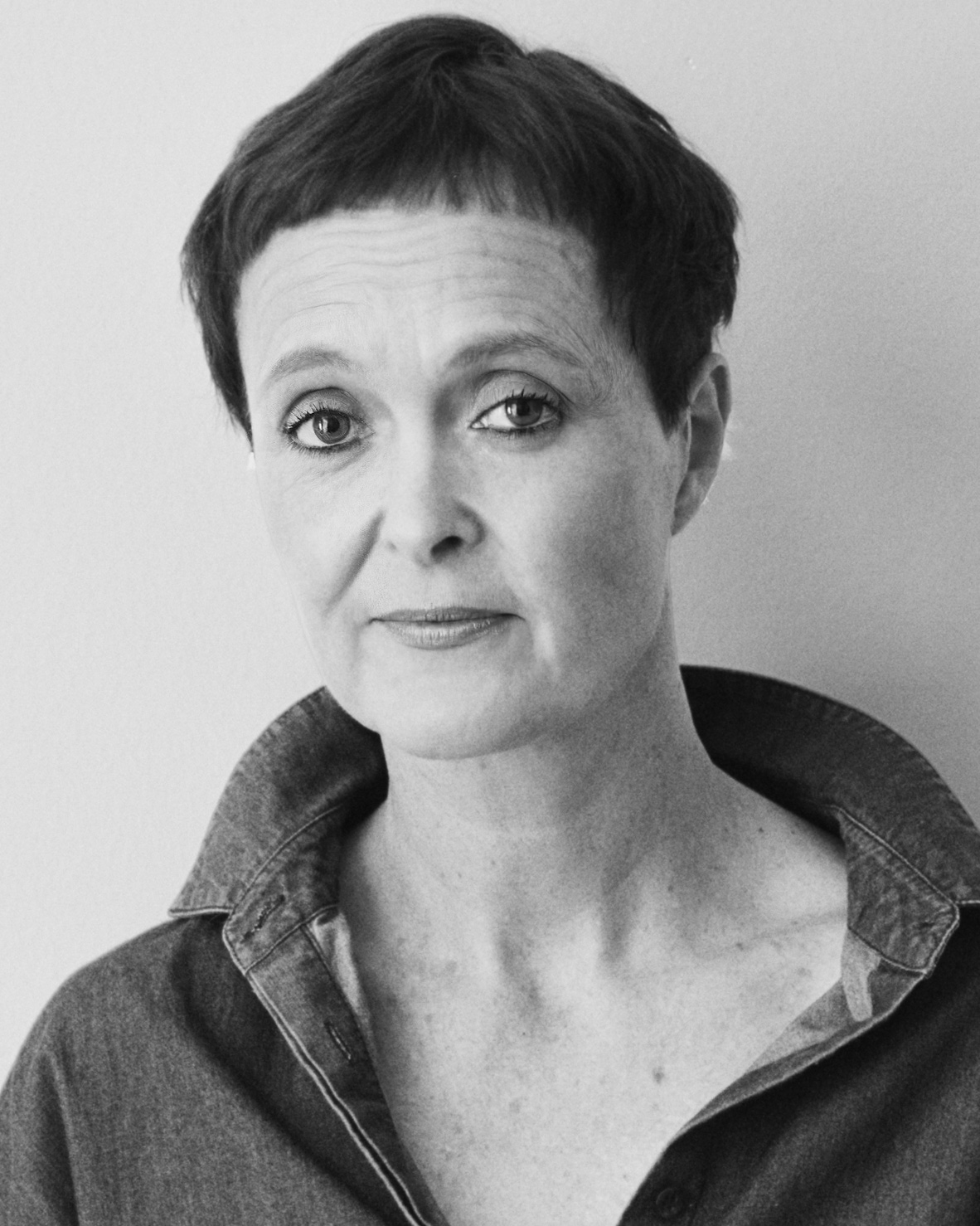
I’m a visual artist and photographer, and over the past 20 years I’ve created a number of significant nationwide exhibitions and book publications — most recently the exhibitions I’m Here Now and The Rootless – We Who Remain.
I also work with communicating and teaching art and photography through workshops and talks, and I’ve helped hundreds of professional, independent and emerging photographers define their photographic language and make their images truly stand out.
I trained under Rigmor Mydtskov, Photographer to Her Majesty the Queen of Denmark, as well as at Fatamorgana – The Danish School of Art Photography, and the European Film College.
If you have any questions, you’re welcome to contact me at
or by phone on +45 26 84 40 43.
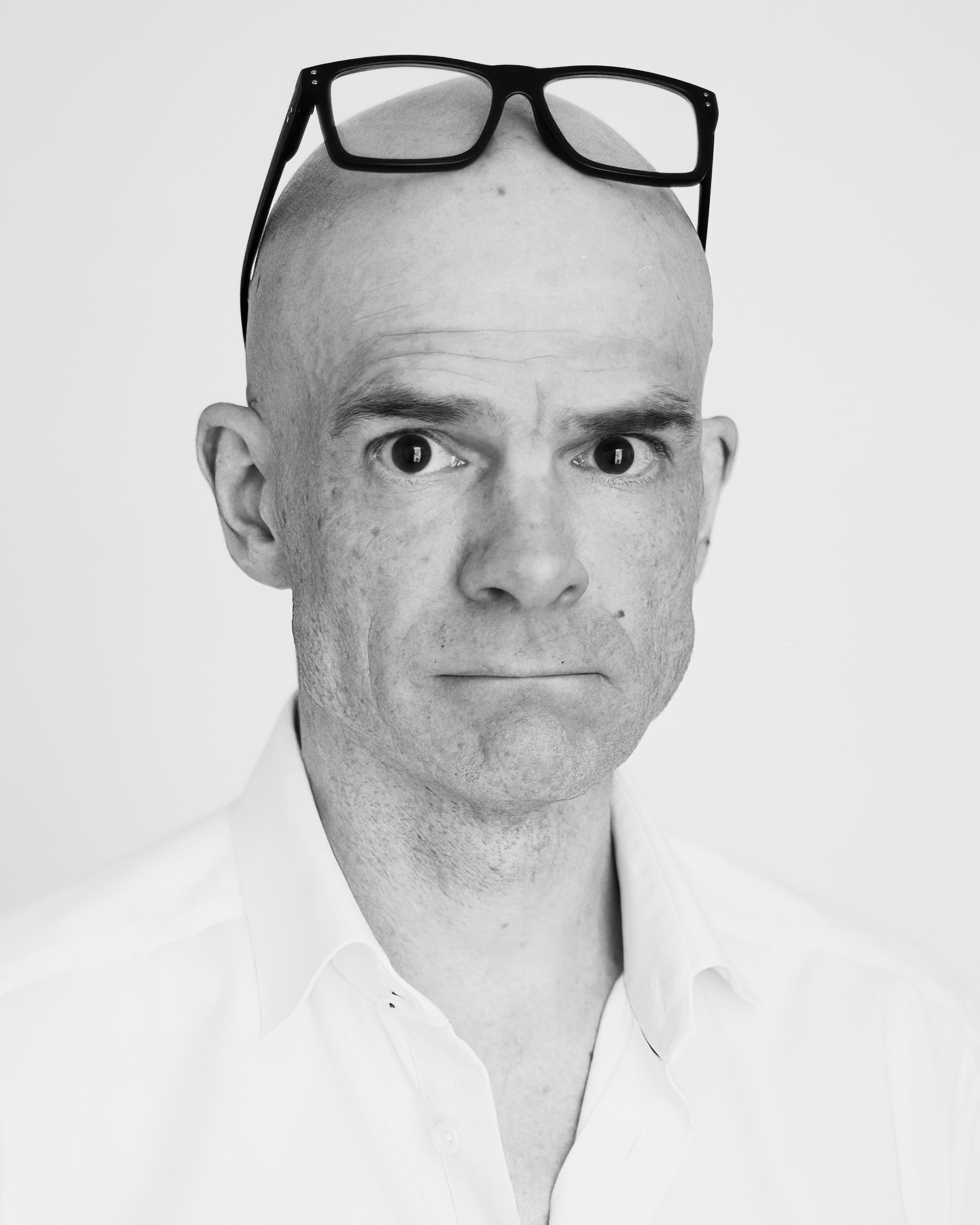
I’m a photographer and image retoucher, and an Adobe Certified Expert in Photoshop. I trained as a photojournalist and have worked as a photographer for more than 20 years for magazines, publishers and companies.
Alongside this, I have specialised in post-production and portrait retouching, as well as finishing fine art prints for museums and exhibitions. I also work on my own artistic projects.
Over the years, I’ve taught at institutions including Fatamorgana – The Danish School of Art Photography, and the Photography Programme under KTS/Next.
If you have any questions, you’re welcome to contact me at michael@theilgaardacademy.com or by phone on +45 31 79 94 79.

